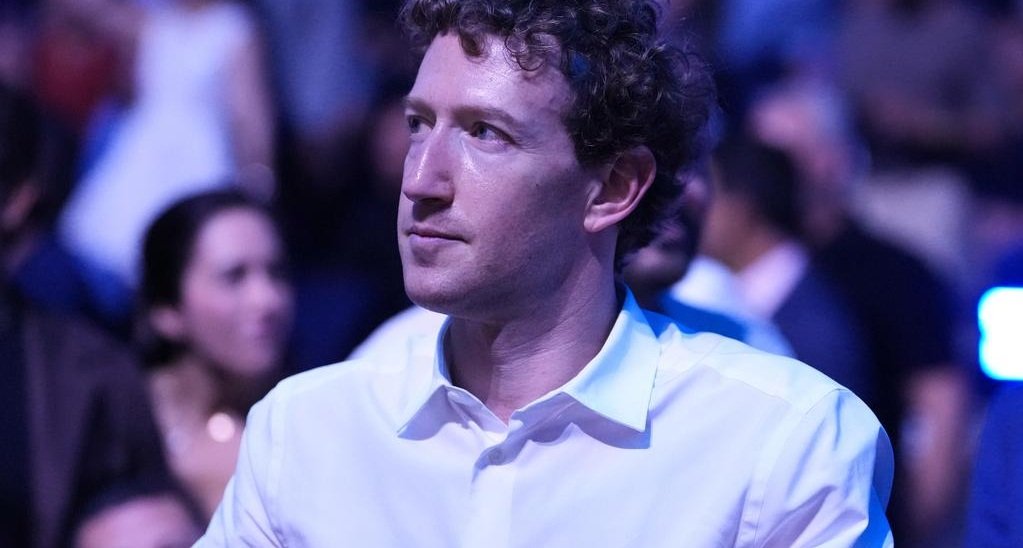
If Zuckerberg loses this case, Instagram and Facebook could change forever.
Meta has faced a series of court defeats in recent years. Courts have ruled that its social media platforms have harmed young users.
But the jury trial starting Tuesday could prove to be Meta's biggest threat yet.
This case is related to a lawsuit filed against Meta in 2023 by 30 US states, including California and New York. These states allege that Meta violated federal and state laws related to children and endangered their privacy.
These states are not only seeking more than $1 trillion from Meta, but are also demanding changes to Instagram and Facebook, including eliminating "like" counts and continuous scrolling.
If Meta loses such a major case, the social media experience of young people could change forever.
The states suing Meta are demanding further changes to the way Instagram and Facebook operate to make it safer for underage users and children.
These states are demanding:
• Implement parental verification for teenage users
• Change its algorithm to prevent users from scrolling for hours at a time
• Remove many image filters that alter the appearance of people in photos
• Remove the autoplay feature from video content
• Restrict the creation of multiple accounts
• Disable disappearing or "temporary" posts like Instagram Stories
All of these features are considered crucial to Meta's current social media platform.
The states argue that these features are designed to keep children, teens, and other users on the platform for as long as possible.
They claim that the Meta app compels young people to return to it repeatedly through things like notifications.
The allegation is that Meta exploits young people by targeting them, encouraging them to join its platform to grow its user base and expand its business. Today, Meta is valued at approximately $1.5 trillion in the stock market.
Meta has consistently denied such claims.
A company spokesperson said in a statement, "We strongly disagree with these allegations and are confident that the evidence will demonstrate our long-standing commitment to supporting young people."
The states are presenting their claims before California's Chief Federal Judge, Yvonne Gonzalez Rogers. She served as the judge in the high-profile Elon Musk vs. Sam Altman case and has a reputation for outspokenness during her nearly 20-year tenure.
Social Media Becomes a 'Public Nuisance'
In a recent ruling against Meta, a New Mexico judge fined the company approximately $942 million and ordered it to make changes to its platform similar to those demanded by these 30 states.
Judge Brian Beadshaid ordered Instagram and Facebook to eliminate like counts for users under 18, prohibit teens from sending nude content through the platforms, and limit push notifications from the apps to certain hours of the day.
The judge declared Meta a public nuisance, like a factory polluting the air, severely impacting public safety. Meta stated that it would appeal the ruling.
Although Judge Beadshaid's order only requires Meta to make changes in New Mexico, if 30 states prevail in their separate lawsuits against Meta, Meta will almost certainly be required to make platform changes across the United States.
The states involved in this lawsuit represent approximately two-thirds of the country's population.
If Meta implements such changes, it would be a major shift in the platform experience for its users.
Questions about 'Likes'
For example, the number of "likes" has been a part of Meta since its early years, when it was simply called Facebook and that was its sole platform.
Today, likes are ubiquitous on social media platforms. They are the primary way to engage with the text, photos, and videos viewed online.
Yet, likes are increasingly seen as a way to foster negative feelings, especially among young people.
A young user named Callie won her lawsuit against Meta earlier this year. During her court testimony, Callie described how she had created dozens of accounts on YouTube and Instagram.
She used the account system to get likes on her posts, to connect with other users, and to gain a sense of satisfaction and self-esteem. Callie was only nine years old at the time. She said she remembers struggling with depression, which she later overcame.
Research over the past several years has shown that engagement metrics like like counts can increase feelings of rejection and depression in adolescents.
In the states' lawsuit against Meta, the company stated that it had submitted over 2 million documents. However, lawyers pointed to Meta's own research, which showed that the number of likes, etc., encourages unnecessary comparison and negatively impacts mental health.
According to Meta's own research, Instagram users compare themselves to others, leading to increased loneliness, body dissatisfaction, and lower mood.
Judge Beadshaid stated in his order that social media platforms were a major cause of the mental health crisis among youth in New Mexico and elsewhere.
Now, lawyers from 30 more states will pressure Judge Gonzalez Rogers to reach the same conclusion.